How Genetic Influence how we Look--Part 2
So in the last post, I mentioned that there were four major genetic contributors to how we respond to exercise, and, therefore, how we have a tendency to look, physiologically. The four contributors were:
A. Muscle fiber type (i.e. fast twitch A, B, AB vs. slow twitch)
B. Muscle belly length
C. Bone width/density
D. Hormonal profiles
I covered the first two in some detail. This time I'll speak about the last two, and perhaps, most important contributors--hormonal profiles and bone structure.
The key to understanding the role bone thickness plays in how muscular we can become is simply understanding that there is a direct correlation between how thick a bone is and how much muscle it can support. In his book, The Sports Gene David Edelstein references research done within the past few years that suggests that the maximum ratio of bone-to-muscle (in kilograms) for men is 5/1, while for women it appears to be 4/1 (meaning, that for each kg of bone, in a male, the maximum amount of muscle he would be able to support, sans steroids, would be 5 kilograms). These are for natural trainees, obviously, as a chemically enhanced trainee will be able to supersede those limits by significant margins. But it's important to note that these ratios are considered to be the absolute limit and will only be ascertained by the most gifted of athletes--i.e. those with optimal muscle fiber ratios, optimal muscle belly length and optimal hormonal distributions (which we'll get into in a second). From my research, the average human skeleton (American) weighs anywhere from 15-30 lbs, which, after adjusting for kg and doing some math, means that the upper limits of muscle growth is going to begin to plateau around 136-lbs of pure muscle.
This number is significantly less than what most fitness "gurus" want you to believe, obviously. Of course, there are going to be people with large skeletons that weigh more than 30-lbs, who also are genetically gifted in other ways. These people exist. And they usually look pretty good. Odds are, however, that this person isn't you. It certainly isn't me. And so we're going to have to adjust our expectations for what might be achievable for ourselves.
(for those looking at what may be possible for them, here's a site that takes such research into account and estimates what kind of muscle mass/body composition levels may be possible for a natural trainee--http://www.weightrainer.net/bodypred.html)
Probably the most important factor in building muscle and burning fat, however, is each of our hormonal profiles. Again, I'm going to simplify the topic, because there's no need to get into extreme detail about the hormones to understand them. All we need to know is that higher levels of testosterone generally lead to increased muscle mass and decreased levels of fat in the body. This is why steroid use is so pronounced in fitness and athletic circles. If one wants to exceed the limitations of their body--such as the limits of how much muscle mass their bone structure is able to support naturally--one needs to increase the amount of testosterone circulating throughout their system, which is precisely what steroids do.
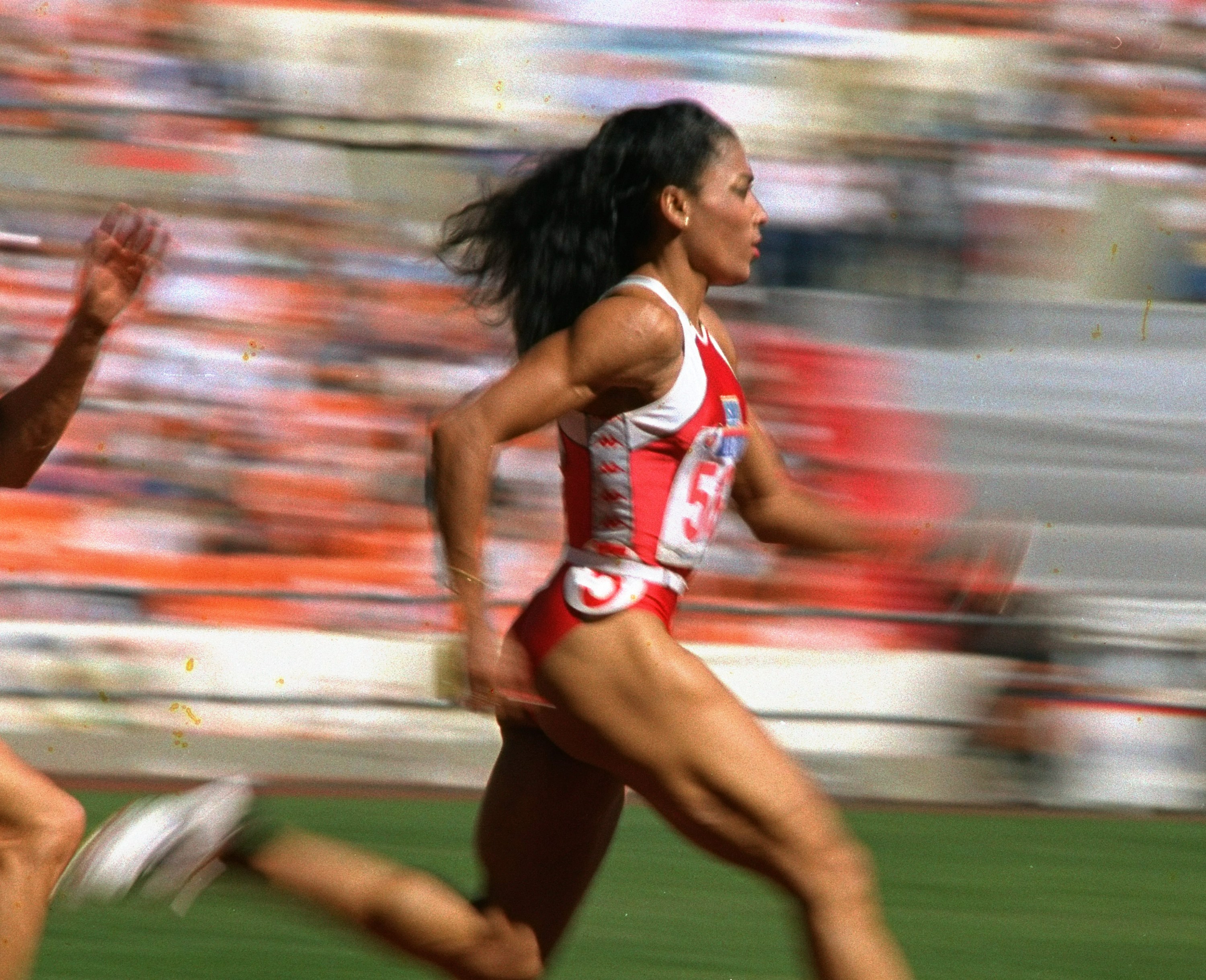
Some people, however, are born with naturally higher levels of testosterone in their bodies. Men, for example, have higher naturally occurring levels of testosterone in their bodies than do women. Hence why well-trained women will probably never match the athletic milestones of well-trained men. Florence Griffith Joyner and her almost 20-year-old world record in 100m dash of 10.49 is faster than I will ever run, and odds are it's faster than anybody who happens to be reading this can run. But it's a time that is broken fairly routinely in high school boys track and field meets. When I ran track in rural Colorado, the fastest runner was from the minuscule town of Hoehne and he ran the 100m dash in about 10.6, meaning that some random skinny high schooler from nowhere in Colorado is almost as fast as the fastest woman in history.
None of this is meant to denigrate or marginalize women in fitness or athletics, it's only to emphasize the importance that hormonal profiles play in performance. The real point of all of this is simply to emphasize that just as there are real differences between male and female athletes caused primarily by hormonal differences, the same idea holds true even intrasex--i.e. there are some males, for example, who are going to have higher levels of naturally occurring testosterone in their bodies than others (and, unfortunately, there are going to be those males with lower levels than what would be considered typical). Therefore, it's foolhardy for us to compare ourselves to others because we're not all playing with the same deck of cards, here. Some of us are holding aces and some of us are holding deuces. Most of us are somewhere in between.
The overarching idea here is that when we see people with big muscles and lean bodies, we're looking at two distinct possibilities, and either possibility has very little to do with exercise itself. The first possibility is that we're looking at a genetically gifted person. Maybe it's a person with a high ratio of fast-twitch muscle fibers and long muscle bellies and think bones and high levels of naturally occurring testosterone flowing through his/her body. These people do exist, but, again, unfortunately, most of us are not these people. The second possibility is that they are someone who is receiving help from various chemical cocktails (steroids, HGH, insulin, etc.) And they way they look is probably not the direct result of their exercise routine. There is no secret or all-powerful routine that somebody knows that you don't. The only secret is to stress the muscles enough that they're receiving messages that they need to grow and/or become stronger. And this stimulus doesn't have to take very much time at all.
None of this is to say that we're not all capable of looking or performing better. We can and should all work to maximize whatever gifts we have. Look at the pictures on this sight or on facebook. Do I look like a professional bodybuilder? Not at all. Do I think I have a fairly fit, healthy-looking and enviable body? Yeah, I do. And so can you. And you can have it in as little as 20-minutes of high intensity strength training each week.
So keep up the hard work. Continue to maximize your own potential and never forget to Be. Heroic.
A. Muscle fiber type (i.e. fast twitch A, B, AB vs. slow twitch)
B. Muscle belly length
C. Bone width/density
D. Hormonal profiles
I covered the first two in some detail. This time I'll speak about the last two, and perhaps, most important contributors--hormonal profiles and bone structure.
The key to understanding the role bone thickness plays in how muscular we can become is simply understanding that there is a direct correlation between how thick a bone is and how much muscle it can support. In his book, The Sports Gene David Edelstein references research done within the past few years that suggests that the maximum ratio of bone-to-muscle (in kilograms) for men is 5/1, while for women it appears to be 4/1 (meaning, that for each kg of bone, in a male, the maximum amount of muscle he would be able to support, sans steroids, would be 5 kilograms). These are for natural trainees, obviously, as a chemically enhanced trainee will be able to supersede those limits by significant margins. But it's important to note that these ratios are considered to be the absolute limit and will only be ascertained by the most gifted of athletes--i.e. those with optimal muscle fiber ratios, optimal muscle belly length and optimal hormonal distributions (which we'll get into in a second). From my research, the average human skeleton (American) weighs anywhere from 15-30 lbs, which, after adjusting for kg and doing some math, means that the upper limits of muscle growth is going to begin to plateau around 136-lbs of pure muscle.
This number is significantly less than what most fitness "gurus" want you to believe, obviously. Of course, there are going to be people with large skeletons that weigh more than 30-lbs, who also are genetically gifted in other ways. These people exist. And they usually look pretty good. Odds are, however, that this person isn't you. It certainly isn't me. And so we're going to have to adjust our expectations for what might be achievable for ourselves.
(for those looking at what may be possible for them, here's a site that takes such research into account and estimates what kind of muscle mass/body composition levels may be possible for a natural trainee--http://www.weightrainer.net/bodypred.html)
Probably the most important factor in building muscle and burning fat, however, is each of our hormonal profiles. Again, I'm going to simplify the topic, because there's no need to get into extreme detail about the hormones to understand them. All we need to know is that higher levels of testosterone generally lead to increased muscle mass and decreased levels of fat in the body. This is why steroid use is so pronounced in fitness and athletic circles. If one wants to exceed the limitations of their body--such as the limits of how much muscle mass their bone structure is able to support naturally--one needs to increase the amount of testosterone circulating throughout their system, which is precisely what steroids do.
Some people, however, are born with naturally higher levels of testosterone in their bodies. Men, for example, have higher naturally occurring levels of testosterone in their bodies than do women. Hence why well-trained women will probably never match the athletic milestones of well-trained men. Florence Griffith Joyner and her almost 20-year-old world record in 100m dash of 10.49 is faster than I will ever run, and odds are it's faster than anybody who happens to be reading this can run. But it's a time that is broken fairly routinely in high school boys track and field meets. When I ran track in rural Colorado, the fastest runner was from the minuscule town of Hoehne and he ran the 100m dash in about 10.6, meaning that some random skinny high schooler from nowhere in Colorado is almost as fast as the fastest woman in history.
None of this is meant to denigrate or marginalize women in fitness or athletics, it's only to emphasize the importance that hormonal profiles play in performance. The real point of all of this is simply to emphasize that just as there are real differences between male and female athletes caused primarily by hormonal differences, the same idea holds true even intrasex--i.e. there are some males, for example, who are going to have higher levels of naturally occurring testosterone in their bodies than others (and, unfortunately, there are going to be those males with lower levels than what would be considered typical). Therefore, it's foolhardy for us to compare ourselves to others because we're not all playing with the same deck of cards, here. Some of us are holding aces and some of us are holding deuces. Most of us are somewhere in between.
The overarching idea here is that when we see people with big muscles and lean bodies, we're looking at two distinct possibilities, and either possibility has very little to do with exercise itself. The first possibility is that we're looking at a genetically gifted person. Maybe it's a person with a high ratio of fast-twitch muscle fibers and long muscle bellies and think bones and high levels of naturally occurring testosterone flowing through his/her body. These people do exist, but, again, unfortunately, most of us are not these people. The second possibility is that they are someone who is receiving help from various chemical cocktails (steroids, HGH, insulin, etc.) And they way they look is probably not the direct result of their exercise routine. There is no secret or all-powerful routine that somebody knows that you don't. The only secret is to stress the muscles enough that they're receiving messages that they need to grow and/or become stronger. And this stimulus doesn't have to take very much time at all.
None of this is to say that we're not all capable of looking or performing better. We can and should all work to maximize whatever gifts we have. Look at the pictures on this sight or on facebook. Do I look like a professional bodybuilder? Not at all. Do I think I have a fairly fit, healthy-looking and enviable body? Yeah, I do. And so can you. And you can have it in as little as 20-minutes of high intensity strength training each week.
So keep up the hard work. Continue to maximize your own potential and never forget to Be. Heroic.


Comments
Post a Comment