Some facts about carbs and proteins
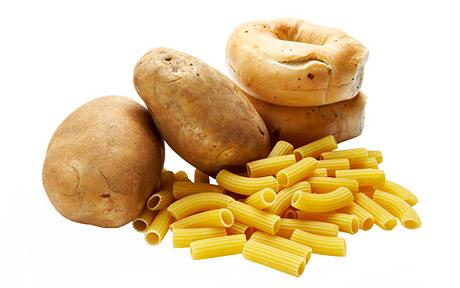
One of the most influential ideas to come along in fitness circles in the past 10 years or so is the idea that carbs are poisonous for our physiques, and, in many cases, people seem to believe that carbs are poisonous, period.
There are some decent reasons for believing as much. One of the things that happens when we ingest carbohydrates is that they metabolize into sugar, which then enters the bloodstream and can induce a surge of insulin. All of which, in turn, leads to all those free-roaming sugars being saved as fatty cells in and around the muscles to be used later in times of energy (read: food) shortages.
This process is a holdover from when our ancestors didn't live in civilized societies with a hyper-abundance of food (read: energy). Back in those days, feast and famine seems to have been the de facto nutritional state. And those of our ancestors who survived were those who were able to easily store excess energy in times of feast so that they could survive off those stores (read: fat) in times of famine.
All of this is more or less true. And as the foundation of the low-carb revolution, seems to produce sound reasoning for eating a diet low in carbs.
Unfortunately, like most things in life, there's more to the story and solutions aren't all that simple.
The primary problem with low-carb diets is that they ignore the flip side of how and why we metabolize carbs the way we do.
It's called the Krebs Cycle.
As per usual, it's not important to understand every single step, nook and cranny of how the Krebs Cycle work. It's not enjoyable to write about and it's not enjoyable to read. What is important is to understand the crux of what it is and how it work.
The Krebs Cycle is the primary process by which the human body converts food into energy. It happens at a cellular level and involves a number of chemical reactions. The two most important things to know about it is that, again, it's the primary way the body metabolizes food into energy and that it works most efficiently when a sufficient amount of carbohydrates have been ingested.
Read that last paragraph again. It's important.
The Krebs Cycle is the primary way the body converts food to energy and it works best when enough carbs have been eaten.
To help us understand why this is and why it's important in helping us understand how to build muscle and lose fat, we need to speak a little bit about "macro-nutrients."
We are all probably more or less familiar with the idea of nutrition and of the importance of eating plenty of vitamins and minerals and what not. However, there are three primary nutrients for which all the lesser nutrients account for. These macro-nutrients are:
1. Carbohydrates
2. Protein
3. Fat
During these low-carb revolutionary times, it is not uncommon to hear or read supposed experts denigrating the importance of carbs. If you listen to these people, carbohydrates are superfluous--a fluke of nature, something that has no reason to exist and for which we have little to no reason to eat.
These people are wrong.
What happens in the Krebs Cycle when there is enough carbs to go around is that the other two macro-nutrients are able to be used efficiently for their purposes, as well. Namely, protein is free to to do its job in tissue repair and maintenance (i.e. muscle building) and fats (in this case, called Cholesterol) are free to address inflammation within the body (i.e. maintain equilibrium).
(As a hopefully quick aside--please note that body fat does not come from ingesting fatty foods. Body fat is generated only through a caloric surplus--eating more calories than is needed. The fat we eat is cholesterol and is not a negative thing in and of itself. Its purpose is to cope with inflammation within the body. High cholesterol levels in the body are less the result of diet and have more to do with other conditions and stressors occurring within the body.)
When we fail to ingest enough carbohydrates, the Krebs Cycle will tap into our protein intake. And instead of being used to repair and maintain muscle, that protein is essentially converted into a carbohydrate and used as energy. Part of the problem with this is that in order to convert the protein into a carb, several extra steps are added to the cycle and even more protein is needed simply to convert the other protein into energy. Hence: the Cycle is most efficient when enough carbs are ingest.
This is actually why low-carb diets are so effective for losing weight--but for all the wrong reasons. Part of why we lose weight so well on low-carb diets is because we're actually losing muscle mass along with the fat. If you look into the research done with weight loss and low-carb diets, you'll see that few, if any, studies account for body composition. If you lose 30-lbs on a low-carb diet, but your body composition stays the same--or even gets worse--you sort of miss the point of losing weight. You're not going to have the toned, muscular look. And, in fact, many people on low-carb diets look "tired" or "drained" precisely because their bodies are not in a healthy state and are forced into a catabolic state in which it must metabolize muscle in order to ascertain enough energy to function.
(Another hopefully quick note: another reason why low carb diets seem to be pretty effective is that much of the time people are simply reducing calories. For example, I once had a friend who made a big to-do about not eating the buns and french fries when we ate fast food. Instead she just ate the burger and a salad. She thought that it was not eating carbs that was causing her to lose weight, when, in fact, she--for example--was cutting her calories by up to 1,000 by not eating the bun and french fries. When a low-carb person eats a sandwich without bread, they're potentially saving several hundred calories. And so many times the diet is simply another form of caloric reduction.)
Therefore, it stands to reason that if we want to build or maintain muscle, we need to ensure we're eating enough carbs so that the body doesn't use the protein in our diet for energy instead of for tissue repair (people also vastly overestimate the amount of protein needed to build muscle because protein shake companies have done a good job of convincing them that Whey is as good as steroids, but that's another post for another day).
Some people may counter with the idea that if we reduce carbs enough we can induce a ketosis, wherein the Krebs Cycle is metabolizing fats as its primary source of energy, which seems like it would be the preferred method of metabolizing food. The problem is that unless we are someone who grew up in a culture that subsists on a Ketogenic diet, ketosis is extremely difficult to induce and even more difficult to maintain. At its best, it's a "spike" strategy for those trying to lean out before a competition or a photo shoot of some kind. Plus, if you weren't raised on a ketogenic diet, horrific odors seem to emanate from every pore in the body when in the midst of ketosis.
There are some decent reasons for believing as much. One of the things that happens when we ingest carbohydrates is that they metabolize into sugar, which then enters the bloodstream and can induce a surge of insulin. All of which, in turn, leads to all those free-roaming sugars being saved as fatty cells in and around the muscles to be used later in times of energy (read: food) shortages.
This process is a holdover from when our ancestors didn't live in civilized societies with a hyper-abundance of food (read: energy). Back in those days, feast and famine seems to have been the de facto nutritional state. And those of our ancestors who survived were those who were able to easily store excess energy in times of feast so that they could survive off those stores (read: fat) in times of famine.
All of this is more or less true. And as the foundation of the low-carb revolution, seems to produce sound reasoning for eating a diet low in carbs.
Unfortunately, like most things in life, there's more to the story and solutions aren't all that simple.
The primary problem with low-carb diets is that they ignore the flip side of how and why we metabolize carbs the way we do.
It's called the Krebs Cycle.
As per usual, it's not important to understand every single step, nook and cranny of how the Krebs Cycle work. It's not enjoyable to write about and it's not enjoyable to read. What is important is to understand the crux of what it is and how it work.
The Krebs Cycle is the primary process by which the human body converts food into energy. It happens at a cellular level and involves a number of chemical reactions. The two most important things to know about it is that, again, it's the primary way the body metabolizes food into energy and that it works most efficiently when a sufficient amount of carbohydrates have been ingested.
Read that last paragraph again. It's important.
The Krebs Cycle is the primary way the body converts food to energy and it works best when enough carbs have been eaten.
To help us understand why this is and why it's important in helping us understand how to build muscle and lose fat, we need to speak a little bit about "macro-nutrients."
We are all probably more or less familiar with the idea of nutrition and of the importance of eating plenty of vitamins and minerals and what not. However, there are three primary nutrients for which all the lesser nutrients account for. These macro-nutrients are:
1. Carbohydrates
2. Protein
3. Fat
During these low-carb revolutionary times, it is not uncommon to hear or read supposed experts denigrating the importance of carbs. If you listen to these people, carbohydrates are superfluous--a fluke of nature, something that has no reason to exist and for which we have little to no reason to eat.
These people are wrong.
What happens in the Krebs Cycle when there is enough carbs to go around is that the other two macro-nutrients are able to be used efficiently for their purposes, as well. Namely, protein is free to to do its job in tissue repair and maintenance (i.e. muscle building) and fats (in this case, called Cholesterol) are free to address inflammation within the body (i.e. maintain equilibrium).
(As a hopefully quick aside--please note that body fat does not come from ingesting fatty foods. Body fat is generated only through a caloric surplus--eating more calories than is needed. The fat we eat is cholesterol and is not a negative thing in and of itself. Its purpose is to cope with inflammation within the body. High cholesterol levels in the body are less the result of diet and have more to do with other conditions and stressors occurring within the body.)
When we fail to ingest enough carbohydrates, the Krebs Cycle will tap into our protein intake. And instead of being used to repair and maintain muscle, that protein is essentially converted into a carbohydrate and used as energy. Part of the problem with this is that in order to convert the protein into a carb, several extra steps are added to the cycle and even more protein is needed simply to convert the other protein into energy. Hence: the Cycle is most efficient when enough carbs are ingest.
This is actually why low-carb diets are so effective for losing weight--but for all the wrong reasons. Part of why we lose weight so well on low-carb diets is because we're actually losing muscle mass along with the fat. If you look into the research done with weight loss and low-carb diets, you'll see that few, if any, studies account for body composition. If you lose 30-lbs on a low-carb diet, but your body composition stays the same--or even gets worse--you sort of miss the point of losing weight. You're not going to have the toned, muscular look. And, in fact, many people on low-carb diets look "tired" or "drained" precisely because their bodies are not in a healthy state and are forced into a catabolic state in which it must metabolize muscle in order to ascertain enough energy to function.
(Another hopefully quick note: another reason why low carb diets seem to be pretty effective is that much of the time people are simply reducing calories. For example, I once had a friend who made a big to-do about not eating the buns and french fries when we ate fast food. Instead she just ate the burger and a salad. She thought that it was not eating carbs that was causing her to lose weight, when, in fact, she--for example--was cutting her calories by up to 1,000 by not eating the bun and french fries. When a low-carb person eats a sandwich without bread, they're potentially saving several hundred calories. And so many times the diet is simply another form of caloric reduction.)
Therefore, it stands to reason that if we want to build or maintain muscle, we need to ensure we're eating enough carbs so that the body doesn't use the protein in our diet for energy instead of for tissue repair (people also vastly overestimate the amount of protein needed to build muscle because protein shake companies have done a good job of convincing them that Whey is as good as steroids, but that's another post for another day).
Some people may counter with the idea that if we reduce carbs enough we can induce a ketosis, wherein the Krebs Cycle is metabolizing fats as its primary source of energy, which seems like it would be the preferred method of metabolizing food. The problem is that unless we are someone who grew up in a culture that subsists on a Ketogenic diet, ketosis is extremely difficult to induce and even more difficult to maintain. At its best, it's a "spike" strategy for those trying to lean out before a competition or a photo shoot of some kind. Plus, if you weren't raised on a ketogenic diet, horrific odors seem to emanate from every pore in the body when in the midst of ketosis.


Comments
Post a Comment