More carbs....
After my last post--which was published about a generation ago. I think I posted it somewhere along the time of the last Star Wars movie--I got a question from a friend about what the takeaways from the information provided were. That was a fair question, and I answered it to the fullest of my capabilities. I also meant to post a follow-up delineating the main points of my rambling response. However, time, as it is prone to do, continued to press on without me, and I lost track of typing the follow up.
That is until recently, when I read a couple of books that really clarified a lot of the "takeaways" from the last post. The two books I read were "The Exercise Myth" by Dr. Henry Solomon and "Rethinking Thin" by Gina Kolata. I'm not here to give a book report on the two books, but I do want to talk about why they stimulated me to finally getting around to writing this post.
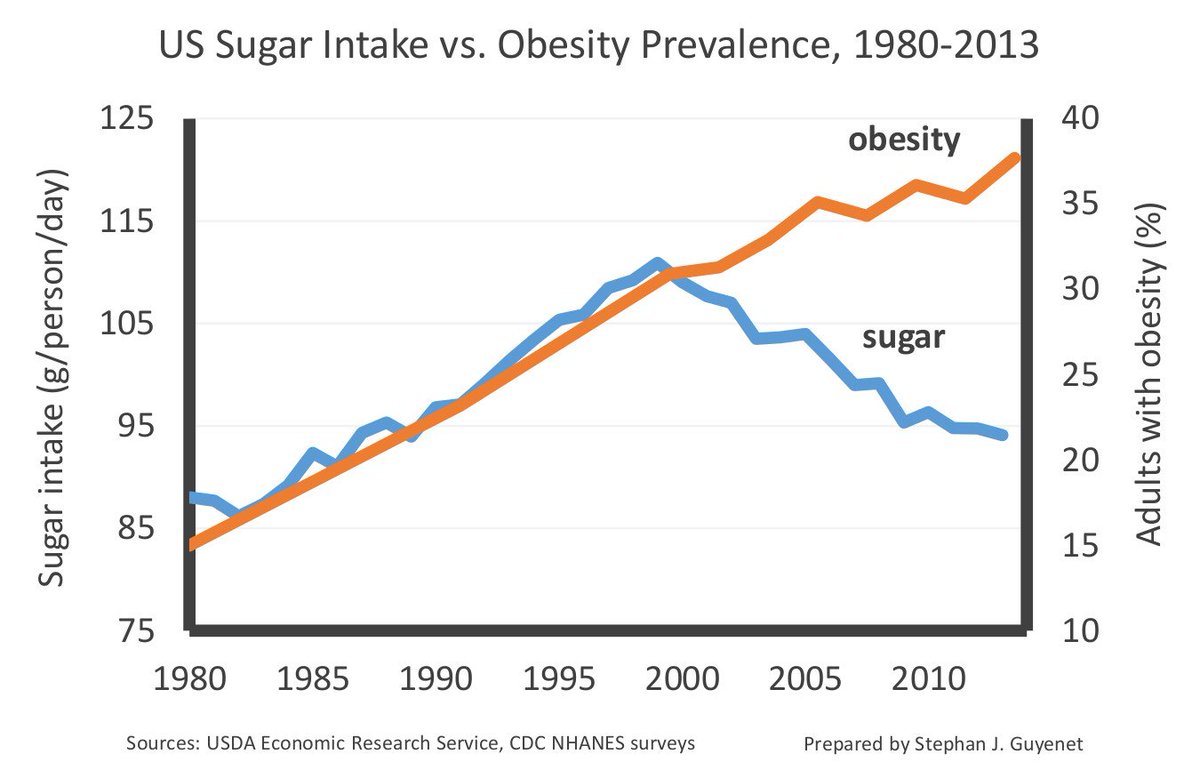
First off, the general idea of the last post was that there is no magic diet, and in fact, many of the fad diets may be doing more harm than good... for some people. Low carb diets in particular have been popular for at least a decade, but evidence clearly shows that both carb and sugar consumption have declined in this country over the past several years and yet obesity not only persists, but continues to rise. So while it is dangerous to make sweeping generalization in the realm of health/fitness/nutrition, it would seem that carb and even sugar consumption are not the primary culprits behind why we're all so overweight. So, essentially, you have a large number of people suffering many of the side-effects of a low-carb diet (such as decreased energy and libido and increased feelings of hunger) to comply with a diet that, in truth, has very little evidence to support its claims of increased health and improved physique.
It is at this point that Kolata's book becomes relevant. In her book, Kolata at once provides a study of all of the major dietary trends in the past two hundred years, while simultaneously documenting the efforts of one of the largest studies pitting low-carb diets vs. caloric-restriction diets and attempting to determine which kind of diet is most successful. Not to ruin the ending, but both diets proved to be untenable. Neither the low-carb group nor the caloric-restriction group was able to provide a significant amount of clients who met their weight-loss goals and neither diet was particularly successful in helping those clients to maintain the losses they had made.
So, the idea I'm trying to get across is not to buy the hype. If something is too good to be true, it probably is. Kolata's book goes into some detail about how pretty much every drug that has proven to be successful at helping with weight loss has also been deadly for a significant portion of its users. So there's no real simple solution to weight loss beyond grueling discipline with one's diet, and simple caloric-restriction--also known as "portion control"--would seem to be the most convenient, as you're not restricting what kinds of foods you can eat, as much as you are restricting how much of that food you allow yourself to indulge in.
Here, for example, is a story about a professor who lost 27lbs on the "Twinkie Diet." His diet consisted of nothing but Hostess pastries for 10 weeks, but he kept the total amount of calories within specific ranges to ensure weight loss. Not only did he lose weight, but his cholesterol and triglyceride levels improved. If we listen to and believe the fitness industry, this is not supposed to be possible, because Twinkies are "junk" and "processed" food, full of carbs. But the fitness industry doesn't really know what it's talking about most of the time. Have we determined if eggs, for example, are good or bad for us? Depending on the study, it's either. How about how most doctors still refer to the Body-Mass Index to help gauge health? The BMI has long been debunked, and anyone with a fair amount of muscle mass has always winced when a doctor has referred to the BMI during a visit. In the picture above, I was 167-lbs at about 10-percent body-fat, but according to the BMI I was "overweight."
(To be fair, even body-composition is not a perfect gauge, as in the picture above, I was sustaining on a diet of about 500-700 calories each day for several weeks. The diet was essentially 8 ounces of yogurt for breakfast, 8 ounces of yogurt for lunch and a fist-sized portion of whatever my wife or I had made for dinner that night. I was basically starving myself and I didn't even get the full six-pack like I wanted, which would've required me to get down to about 6-8 percent body fat, probably. I also had a sallow, hollow face that had people at work asking me if I was feeling well, because I looked sick. So low levels of body fat are potentially signs of being malnourished, for most people, while the fitness industry leads us to believe that that's just the way a person is supposed to look if they "work out.")
My own experiences would seem to align with the Twinkie man's experiences. Two years ago I tried a low-carb, high protein diet. I wanted to get the 1.0-1.5 grams of protein per desired bodyweight that is recommended for those on a "bodybuilding" diet. I did gain weight, but I can't say that I was "lean" by any stretch. I gained weight as if I were on a normal diet (which is to say, no "diet" at all), and I gained weight because it takes a lot of food to get the 185-lbs of protein I was shooting for. I ended up weighing around 190-lbs, but I can't say my body-composition level improved to any noticeable degree, and I hated life because I couldn't eat tortillas. The pic above, as I already touched on, was taken when I was on a diet that was low in all of the macronutrients. I wasn't getting the recommended amount of carbs or protein or fat, and, yet, I think I'm probably more muscular than most people who weigh 167-lbs, despite not ingesting the 167 grams of protein recommended by most body-building gurus as a minimum (also note that the 500-700 calories I was ingesting is nowhere near the 2000 calories I was supposed to be consuming for "maintenance" of weight at 167-lbs as is recommend by most of the calorie calculators I have consulted for this essay. Again, the fitness industry is full of shit.
The point of all of this being that in terms of how we look, raw caloric intake is the primary mitigating factor. It's not what kind of food we eat, but how much we are eating that matters most. Which would seem to make sense, and which should be embraced by so-called "paleo" enthusiasts because prehistoric man lived in a world without consistent sources of nutrition and so it would seems to make sense that the body has adapted to make good use of whatever it can get its hands on, whether it's Twinkies or raw kale. In speaking about genetics, Ellington Darden spoke about how Mike Mentzer's diet consisted primarily of ice cream and other junk food, and yet he was one of the greatest bodybuilders of all time.
So, to conclude this part of the post, the primary idea is just to experiment with various kinds of foods and diets and see how each one effects you, personally. While I seem to think that caloric intake is the most important think to keep in mind when dieting, and my own personal experiences seem to jibe with that observation, only you can know for sure how a diet is impacting you. You may respond well to a low-carb diet and that's fine. But to say there's a one-kind-fits-all diet that is magical is stupid and should not be believed. Even if I personally assert that a portion control diet is best, remember that in Kolata's book, even that kind of diet didn't prove to more or less effective than the low-carb diet, in the long run.
Just for the sake of edification, the conclusion that Kolata comes to is that we are organisms like any other and we will adapt to our surroundings like any other. And since we live in a time and place of nutritional abundance, we are adapting and simply becoming bigger human beings than our ancestors were. Remember, there is a different between health and fitness, and one does not automatically beget the other. And, as I have already touched on, having low-body-fat numbers is not necessarily healthy. In fact, Kolata points out studies that seem to show that the objectively healthiest individuals are those who are generally considered to be "overweight" by the BMI standards. All of which actually brings me to Dr. Solomon's book and the lessons to be learned therein. Which I will cover in a separate post, so as not to require more of your time than I already have. But I promise to publish it within the next day or two.
That is until recently, when I read a couple of books that really clarified a lot of the "takeaways" from the last post. The two books I read were "The Exercise Myth" by Dr. Henry Solomon and "Rethinking Thin" by Gina Kolata. I'm not here to give a book report on the two books, but I do want to talk about why they stimulated me to finally getting around to writing this post.
First off, the general idea of the last post was that there is no magic diet, and in fact, many of the fad diets may be doing more harm than good... for some people. Low carb diets in particular have been popular for at least a decade, but evidence clearly shows that both carb and sugar consumption have declined in this country over the past several years and yet obesity not only persists, but continues to rise. So while it is dangerous to make sweeping generalization in the realm of health/fitness/nutrition, it would seem that carb and even sugar consumption are not the primary culprits behind why we're all so overweight. So, essentially, you have a large number of people suffering many of the side-effects of a low-carb diet (such as decreased energy and libido and increased feelings of hunger) to comply with a diet that, in truth, has very little evidence to support its claims of increased health and improved physique.
It is at this point that Kolata's book becomes relevant. In her book, Kolata at once provides a study of all of the major dietary trends in the past two hundred years, while simultaneously documenting the efforts of one of the largest studies pitting low-carb diets vs. caloric-restriction diets and attempting to determine which kind of diet is most successful. Not to ruin the ending, but both diets proved to be untenable. Neither the low-carb group nor the caloric-restriction group was able to provide a significant amount of clients who met their weight-loss goals and neither diet was particularly successful in helping those clients to maintain the losses they had made.
So, the idea I'm trying to get across is not to buy the hype. If something is too good to be true, it probably is. Kolata's book goes into some detail about how pretty much every drug that has proven to be successful at helping with weight loss has also been deadly for a significant portion of its users. So there's no real simple solution to weight loss beyond grueling discipline with one's diet, and simple caloric-restriction--also known as "portion control"--would seem to be the most convenient, as you're not restricting what kinds of foods you can eat, as much as you are restricting how much of that food you allow yourself to indulge in.
Here, for example, is a story about a professor who lost 27lbs on the "Twinkie Diet." His diet consisted of nothing but Hostess pastries for 10 weeks, but he kept the total amount of calories within specific ranges to ensure weight loss. Not only did he lose weight, but his cholesterol and triglyceride levels improved. If we listen to and believe the fitness industry, this is not supposed to be possible, because Twinkies are "junk" and "processed" food, full of carbs. But the fitness industry doesn't really know what it's talking about most of the time. Have we determined if eggs, for example, are good or bad for us? Depending on the study, it's either. How about how most doctors still refer to the Body-Mass Index to help gauge health? The BMI has long been debunked, and anyone with a fair amount of muscle mass has always winced when a doctor has referred to the BMI during a visit. In the picture above, I was 167-lbs at about 10-percent body-fat, but according to the BMI I was "overweight."
(To be fair, even body-composition is not a perfect gauge, as in the picture above, I was sustaining on a diet of about 500-700 calories each day for several weeks. The diet was essentially 8 ounces of yogurt for breakfast, 8 ounces of yogurt for lunch and a fist-sized portion of whatever my wife or I had made for dinner that night. I was basically starving myself and I didn't even get the full six-pack like I wanted, which would've required me to get down to about 6-8 percent body fat, probably. I also had a sallow, hollow face that had people at work asking me if I was feeling well, because I looked sick. So low levels of body fat are potentially signs of being malnourished, for most people, while the fitness industry leads us to believe that that's just the way a person is supposed to look if they "work out.")
My own experiences would seem to align with the Twinkie man's experiences. Two years ago I tried a low-carb, high protein diet. I wanted to get the 1.0-1.5 grams of protein per desired bodyweight that is recommended for those on a "bodybuilding" diet. I did gain weight, but I can't say that I was "lean" by any stretch. I gained weight as if I were on a normal diet (which is to say, no "diet" at all), and I gained weight because it takes a lot of food to get the 185-lbs of protein I was shooting for. I ended up weighing around 190-lbs, but I can't say my body-composition level improved to any noticeable degree, and I hated life because I couldn't eat tortillas. The pic above, as I already touched on, was taken when I was on a diet that was low in all of the macronutrients. I wasn't getting the recommended amount of carbs or protein or fat, and, yet, I think I'm probably more muscular than most people who weigh 167-lbs, despite not ingesting the 167 grams of protein recommended by most body-building gurus as a minimum (also note that the 500-700 calories I was ingesting is nowhere near the 2000 calories I was supposed to be consuming for "maintenance" of weight at 167-lbs as is recommend by most of the calorie calculators I have consulted for this essay. Again, the fitness industry is full of shit.
The point of all of this being that in terms of how we look, raw caloric intake is the primary mitigating factor. It's not what kind of food we eat, but how much we are eating that matters most. Which would seem to make sense, and which should be embraced by so-called "paleo" enthusiasts because prehistoric man lived in a world without consistent sources of nutrition and so it would seems to make sense that the body has adapted to make good use of whatever it can get its hands on, whether it's Twinkies or raw kale. In speaking about genetics, Ellington Darden spoke about how Mike Mentzer's diet consisted primarily of ice cream and other junk food, and yet he was one of the greatest bodybuilders of all time.
So, to conclude this part of the post, the primary idea is just to experiment with various kinds of foods and diets and see how each one effects you, personally. While I seem to think that caloric intake is the most important think to keep in mind when dieting, and my own personal experiences seem to jibe with that observation, only you can know for sure how a diet is impacting you. You may respond well to a low-carb diet and that's fine. But to say there's a one-kind-fits-all diet that is magical is stupid and should not be believed. Even if I personally assert that a portion control diet is best, remember that in Kolata's book, even that kind of diet didn't prove to more or less effective than the low-carb diet, in the long run.
Just for the sake of edification, the conclusion that Kolata comes to is that we are organisms like any other and we will adapt to our surroundings like any other. And since we live in a time and place of nutritional abundance, we are adapting and simply becoming bigger human beings than our ancestors were. Remember, there is a different between health and fitness, and one does not automatically beget the other. And, as I have already touched on, having low-body-fat numbers is not necessarily healthy. In fact, Kolata points out studies that seem to show that the objectively healthiest individuals are those who are generally considered to be "overweight" by the BMI standards. All of which actually brings me to Dr. Solomon's book and the lessons to be learned therein. Which I will cover in a separate post, so as not to require more of your time than I already have. But I promise to publish it within the next day or two.
Comments
Post a Comment